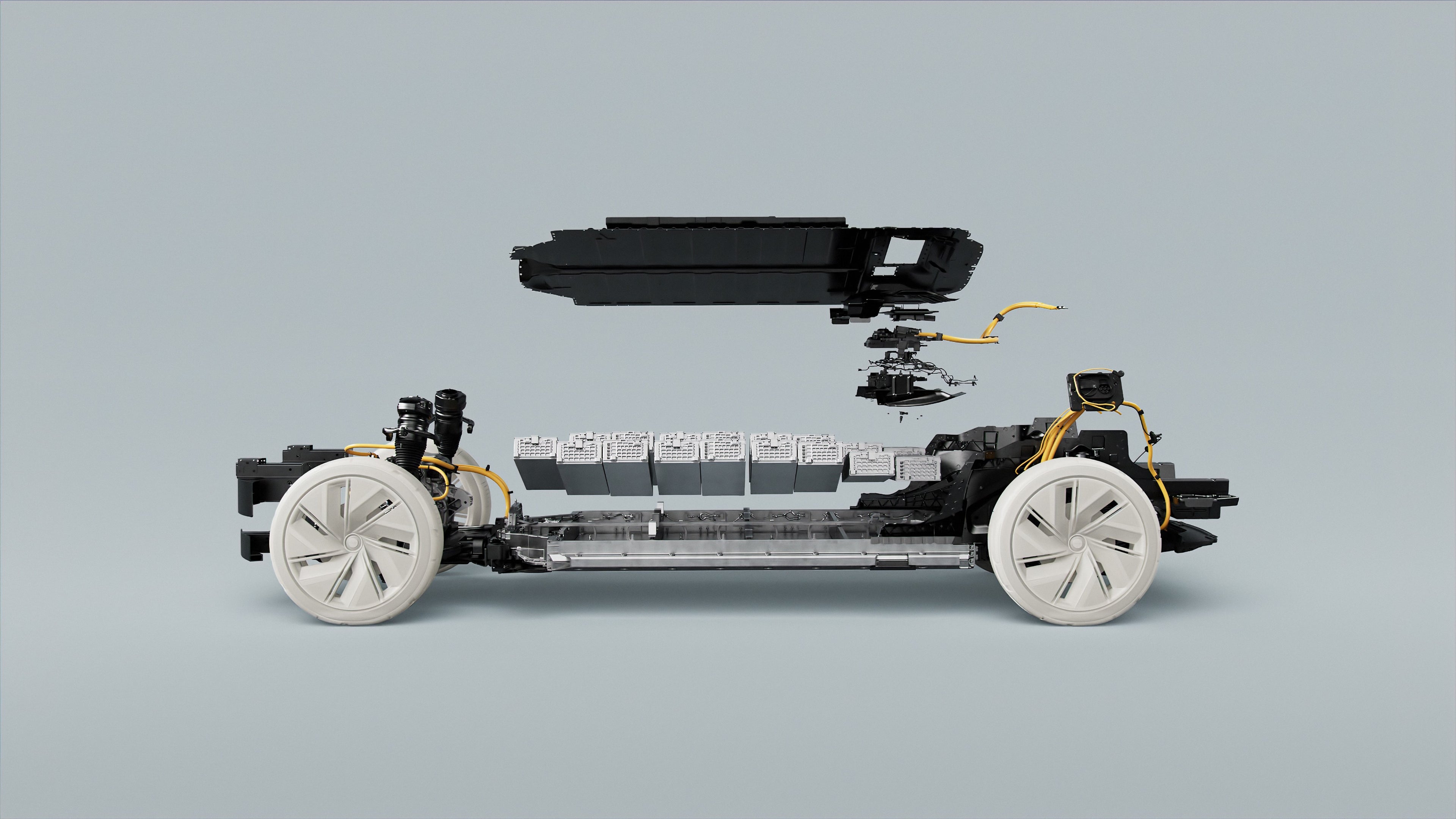
We’re serious about our electrification journey, aiming to be a leader when it comes to premium electric cars, and we have the plan on how to get there. By next year we aim for half of all cars we sell to be fully electric, and in 2030, we expect to reach another giant milestone: becoming a fully electric car maker.
Thanks to our new partnership with Breathe Battery Technologies (Breathe), we position ourselves in the best possible position for an all-electric future. By implementing their flagship software product, Breathe Charge, in our future fully electric cars, we optimise and improve the performance of our charging technology. The result? We will be able to tackle a familiar issue for electric car drivers, providing them with even faster charging times and an improved overall driving and charging experience.
With the new technology, we expect to reduce the time it takes to charge your electric Volvo car from 10 to 80 per cent by as much as 30 per cent. Even better: the charging time improvements will last across the full battery life cycle without impacting its health.
“The investment and commercial partnership with Breathe helps us address a familiar pain point for electric car customers and makes our charging performance even more competitive,” says Ann-Sofie Ekberg, CEO of the Volvo Cars Tech Fund. “Faster charging times, in the range where customers typically fast charge, represent a major step in the right direction as we continue to boost electric mobility and make it available to more people.”
Software-defined batteries
For all you tech aficionados out there, let’s take a closer look at how the technology works.
Breathe’s software differs from traditional stepped charging. It uses adaptive charging to dynamically control the battery in real-time, which results in significantly shorter charging times.
Using algorithms, the software manages the charging process in line with the battery’s health to deliver the best charging experience while avoiding the risk of lithium plating, which can harm the battery’s performance and lifespan.


