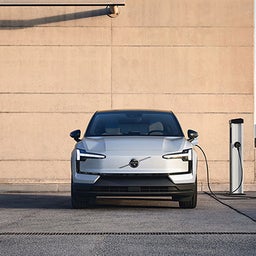
EX30 is shown for illustrative purposes only and may not be available in all markets. Availability may vary by region
News
Master urban driving and discover how to save energy, improve efficiency and make the most of your electric Volvo.
Electrification
EX30
EX30 is shown for illustrative purposes only and may not be available in all markets. Availability may vary by region
City driving is usually made up of short trips, familiar routes and the same traffic lights you pass every day. And for electric cars, it’s precisely in these everyday moments where efficiency really matters.
Electric cars are well suited to city life. They’re quiet when pulling away from the curb, smooth in slow-moving traffic and free from tailpipe emissions. At the same time, urban driving brings its own challenges: frequent braking, heavy traffic and unpredictable road conditions can drain battery life faster than expected. With smart driving techniques and a little planning, you can improve efficiency, reduce energy consumption and make the most of every charge.
Much of that comes down to anticipation. In city traffic, it pays to look a little further ahead and let the car do more of the work. Instead of rushing between lights, easing off the pedal early and allowing the car to slow down naturally creates a smoother flow and is noticeably easier on energy use over time.
It’s in situations like these where electric cars really show their strength. Every time you slow down, regenerative braking helps recover energy that would otherwise be lost, feeding it back into the battery. In practice, that means letting the car decelerate gently as traffic builds or a red light approaches, rather than relying on last‑minute braking.
Heating and air conditioning drains an electric car’s battery quickly, especially in extreme temperatures. Pre‑conditioning the cabin via the Volvo Cars app while the car is still plugged in means you start your journey already comfortable, minimising energy use during the drive. When conditions allow, opening the windows or using ventilation settings can help regulate cabin temperature naturally. And on colder days, heated seats use less energy than warming the entire cabin, while still keeping you comfortable.
City driving can mean congestion, frequent stops and inefficient detours. Planning ahead helps you avoid unnecessary idling and energy use. Use navigation apps that suggest energy-efficient routes, avoid high-traffic areas when possible and take advantage of city infrastructure, such as dedicated EV charging stations.
Speaking of charging stations: charging habits are just as much a part of efficient city driving as what happens behind the wheel. Charging during off‑peak hours can help lower electricity costs and ease demand on the grid, while using public chargers strategically for short top‑ups keeps you moving without waiting for a full charge. For day‑to‑day use, keeping the battery level between around 20 and 80 per cent can help support long‑term battery health, especially when most trips are short.
Keeping your car in good shape also plays an important role. Correct tyre pressure reduces rolling resistance, helping your electric car move more smoothly and efficiently, while updated battery management software ensures energy is used as effectively as possible.
Maximising your electric car’s range in the city doesn’t require dramatic changes. Driving smoothly, making the most of regenerative braking, choosing eco‑focused driving modes when it makes sense, and managing charging in a more deliberate way all contribute to better efficiency.
With advanced technology such as intelligent energy management, eco‑driving modes and real‑time efficiency tracking, our plug‑in hybrids and electric cars are designed to make city driving feel not just more efficient, but more seamless and enjoyable too.
Share